Cor ad Cor Loquitur — the foundational principle of Salesian education
At the core of Salesian education lies the profound conviction that true teaching flows from the heart. St. Francis de Sales taught that educators must first love those they teach, for it is love that opens the mind to truth and the will to goodness. This "Cor ad Cor Loquitur" — Heart Speaks to Heart — is not merely a motto but a living pedagogy that has animated Salesian schools for centuries.
In practice, this means that every Salesian educator is called to be a witness, a companion, and a guide — walking alongside students with patience, empathy, and unwavering belief in their potential. The classroom becomes a community of trust where hearts are formed as much as minds, and where the teacher's own witness of faith and virtue inspires students more powerfully than any textbook.
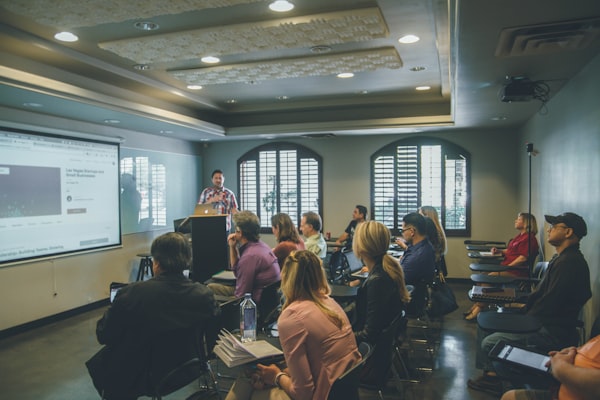
St. Francis de Sales wrote extensively about the importance of adapting to the individual. He compared the educator to a physician who must understand each patient's unique constitution before prescribing a remedy. Similarly, Salesian educators are called to know each student personally — their strengths, struggles, interests, and dreams — and to shape the educational experience accordingly.
This personal approach does not mean lowering standards. On the contrary, Salesian education sets high expectations but accompanies students in reaching them. The Salesian educator is like a loving parent who cheers from the sidelines, celebrates every step forward, and gently lifts the student after every fall. This is the heart of the Salesian method — an education that is demanding yet kind, rigorous yet merciful.
The "Heart Speaks to Heart" pedagogy also emphasizes the importance of presence. In an age of distraction, the Salesian educator offers the gift of undivided attention. By truly listening to students, by being fully present to their needs and aspirations, the educator communicates that each young person is valued, seen, and loved. This experience of being cherished is itself transformative and forms the foundation for all authentic learning.

Three pillars that define our educational approach, inspired by St. John Bosco
We engage the intellect through dialogue, critical thinking, and reasoned inquiry. Students are encouraged to ask questions, explore ideas, and develop a well-formed conscience. Reason respects the dignity of the learner and invites understanding rather than imposing it. In the Salesian classroom, discipline is achieved through persuasion and dialogue, not fear or coercion. Students come to understand the reasons behind expectations and internalize values through thoughtful reflection. Reason also means that educators must be reasonable in their demands — setting expectations that are challenging yet attainable, and adapting their approach to the capacity of each student.
Faith is not imposed but proposed. We create an environment where students encounter the living God through prayer, sacrament, service, and the witness of educators. Religion gives ultimate meaning to learning and shapes a vision of life rooted in love. The Salesian school is a place where faith is woven into the fabric of daily life — not just in religion classes, but in the way teachers treat students, in the priorities of the institution, and in the culture of care that pervades every interaction. Students are invited to develop a personal relationship with God, to discover their dignity as children of God, and to see their studies and relationships as part of a larger spiritual journey.
The hallmark of Salesian education is "douceur" — a gentle, affirming kindness that disarms fear and builds trust. Discipline is achieved through relationship rather than punishment. Kindness creates the psychological safety necessary for authentic growth and learning. St. Francis de Sales famously said that "a spoonful of honey attracts more flies than a barrel of vinegar." In the educational context, this means that a kind word, a smile, and a gesture of understanding are far more effective in forming character than harsh discipline. Salesian educators strive to create an atmosphere of family, where students feel at home and are thus free to be themselves, make mistakes, and grow without fear of condemnation.
"The Preventive System is based entirely on reason, religion, and loving kindness. It excludes all violent punishment and strives to make virtue attractive." — St. John Bosco
The three dimensions of holistic Salesian education that form the whole person
Academic excellence and intellectual formation. We cultivate a love for learning, critical thinking, and the pursuit of truth across all disciplines. The mind is sharpened to engage the world with wisdom and discernment. Salesian schools maintain rigorous academic standards while fostering creativity, curiosity, and a lifelong passion for knowledge. Students are taught not merely to accumulate facts, but to think deeply, question thoughtfully, and integrate knowledge across subjects. The goal is not just a well-educated mind, but a mind formed in wisdom — capable of discerning truth, making sound judgments, and contributing meaningfully to society.
Spiritual and moral formation. We nurture the inner life through prayer, reflection, and the practice of virtue. The heart is formed to love what is good, true, and beautiful, and to serve others with compassion. Salesian education recognizes that the deepest questions of life are questions of meaning, purpose, and love. Through religious instruction, retreats, service opportunities, and the daily witness of faith-filled educators, students are invited to develop a vibrant interior life. They learn to listen to their conscience, to make choices rooted in values, and to open their hearts to God and neighbour. The formation of the heart ensures that knowledge is guided by love and that talent is placed at the service of others.
Practical skills and service. Education extends beyond the classroom into real-world action. Students learn by doing — through service projects, leadership roles, and hands-on experiences that prepare them to build a more just and peaceful world. The Salesian approach values the dignity of work and the importance of putting knowledge into practice. Through extracurricular activities, community service, internships, and student organizations, young people develop practical competencies, teamwork, and a strong work ethic. They discover that true education is not complete until it bears fruit in action — in building up the community, serving the poor, and working for the common good.
Discover how our educational philosophy comes to life in schools and institutions around the world.